Wondering whether Edwardsville’s older neighborhoods or newer subdivisions are the better fit for your next move? You are not alone. If you are weighing charm against convenience, or flexibility against neighborhood rules, it helps to know that Edwardsville offers both in very distinct ways. This guide will walk you through the real differences so you can narrow your search with more confidence. Let’s dive in.
Established subdivisions in Edwardsville
Older neighborhoods and mature subdivisions in Edwardsville often stand out for their history, varied home styles, and strong sense of place. In areas like Leclaire and the Brick Street or St. Louis Street historic districts, homes date back to the 1880s and 1890s and reflect several architectural styles identified by the city.
That usually means you will see more variation from one property to the next. Lot shapes, home sizes, and exterior details may feel less uniform than what you would find in a newer planned development. For many buyers, that variety is part of the appeal.
Historic districts bring character
Leclaire was founded in 1890 as a cooperative village. Friends of Leclaire describes it as a community built around affordable homes, education, recreation, and self-improvement, and the area remains one of Edwardsville’s recognized historic districts.
The city also identifies the Brick Street District and St. Louis Street District as part of historic Edwardsville. These central areas can appeal to buyers who want restored homes, older architecture, and easier access to downtown amenities and events.
Older does not always mean fewer rules
One common assumption is that an older neighborhood comes with fewer restrictions. In Edwardsville, that is not always true.
If a home is in a historic district or is a landmark property, the city’s Historic Preservation Commission reviews certain work, including new construction and demolition. That means exterior changes may involve an extra review step that buyers should understand before making plans.
Dunlap Lake shows a different type of established living
Dunlap Lake is a mature subdivision with a very different feel from the historic core. The neighborhood centers around a 138-acre lake and includes 360 single-family homes just east of downtown Edwardsville.
The property owners association says the lake was created in 1939, the association was founded in 1950 and incorporated in 1952, and the neighborhood was annexed into Edwardsville in 1977. Today, residents have access to lake-oriented amenities such as boating, swimming, ice skating, fishing, and shoreline access.
Dunlap Lake also shows that established neighborhoods can still have detailed rulebooks. Its current restrictions require permits for many improvements, including additions, garages, fences, pools, docks, seawalls, pergolas, solar panels, and shoreline stabilization.
New-build communities in Edwardsville
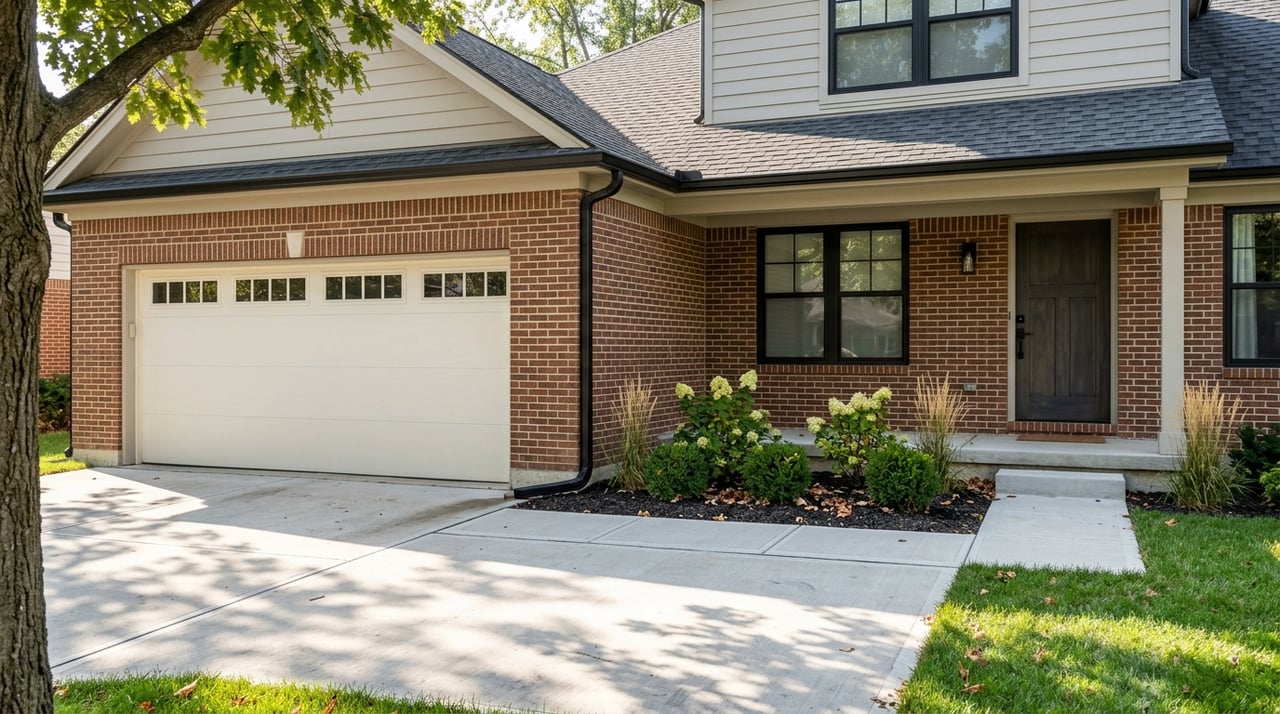
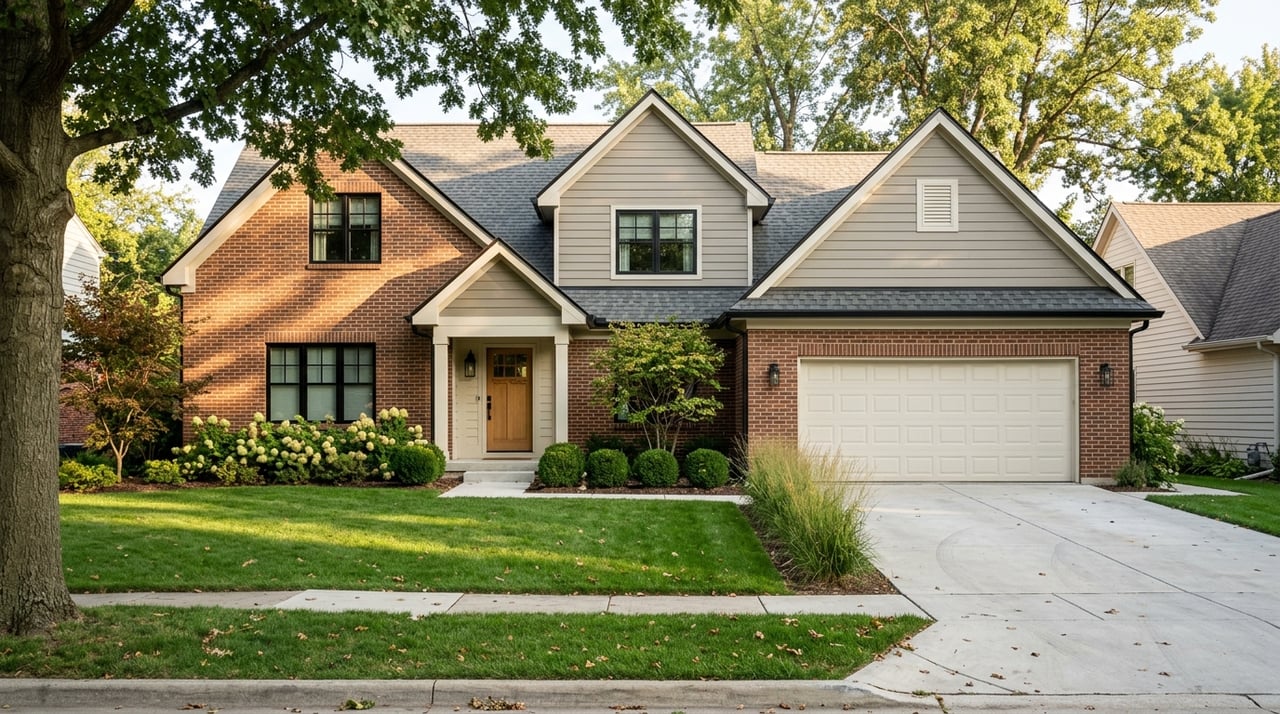
Newer subdivisions in Edwardsville tend to offer more predictability in design, materials, and neighborhood layout. If you like knowing the general look, scale, and standards of the homes around you, this side of the market may feel more comfortable.
The city’s design guidelines treat new single-family subdivisions as their own district. Those guidelines emphasize connected roads and trails, preserved natural settings, compatible building types, and consistent setbacks.
City standards shape the look
Edwardsville’s design guidelines state that newer residential subdivisions are generally approved as planned unit developments. The city also requires at least 35 percent of exterior walls to be brick, stone, masonry, stucco, or architectural precast concrete from the foundation to the eaves, with at least 35 percent of the front facade made of those materials as well.
In simple terms, newer communities often follow a more intentional visual plan. That can create a more cohesive streetscape, but it can also mean fewer differences from house to house.
Ebbets Field offers a current example
According to the developer, Ebbets Field has lots available and is close to parks, recreation, shopping, and dining, with easy access to I-55 and I-270. A 2025 price sheet posted by the developer listed lots from the $79,990s.
The same published information includes minimum square-footage requirements for ranch and two-story homes, 50 percent brick on first-floor exterior wall surfaces, laminated architectural shingles, sodded and landscaped yards, city water and sewer, gas, electric, and concrete streets. For buyers considering a build, those details can make planning easier from the start.
The Oaks highlights covenants and open space
The Oaks is another example of a newer Edwardsville subdivision with formal standards. Its recorded covenants require one detached single-family dwelling per lot, attached garages, minimum floor areas, setback rules, and brick, brick veneer, or stone on at least 25 percent of the front exterior wall surface.
The covenants also include an architectural control process, sidewalk standards, limits on outdoor storage of vehicles and recreational equipment, and lien rights tied to unpaid assessments. The recorded documents also reference wetland parcels, which shows how natural features and common areas may be built into newer subdivision layouts.
Key differences to compare
When you compare established neighborhoods with new-build communities in Edwardsville, the biggest difference is not just the age of the homes. It is often the balance between character and consistency, and between flexibility and oversight.
Here is a simple way to think about it:
| Feature | Established Areas | New-Build Communities |
|---|---|---|
| Home style | More variation in size and architecture | More consistent home design and materials |
| Neighborhood identity | Often shaped by history or lake living | Often shaped by planned layout and covenants |
| Rules and approvals | May involve historic review or HOA permits | Often include HOA approvals and clear build standards |
| Lot patterns | Can be more varied | Usually more standardized |
| Amenities | Downtown access, historic setting, or lake use | Common areas, trails, parks access, and newer infrastructure |
Lifestyle and location patterns
Your day-to-day routine matters just as much as the house itself. In Edwardsville, established and newer areas often connect to different lifestyle patterns.
Downtown access and historic setting
The city describes downtown Main Street as easy to reach whether you live within walking or biking distance or are visiting from out of town. The Wildey Theatre sits among restaurants, shops, and businesses, and City Park hosts the Land of Goshen Community Market.
For buyers who want a stronger connection to downtown events and older neighborhood identity, central historic areas may offer a better match. Leclaire, for example, includes a 5-acre park and hosts Parkfest according to Friends of Leclaire.
East-side growth and commute access
On the east side of Edwardsville, the pattern often shifts toward parks, roadway access, and newer subdivision development. Plummer Family Park sits on 83 acres near I-55 and Governors Parkway, and the city’s parks information also points residents to Madison County Transit’s 138-mile trail system.
Ebbets Field highlights quick access to I-55 and I-270, and The Oaks is located on Illinois Route 143 east of Dunlap Lake. If your routine depends on commuting routes or newer retail corridors, these locations may be worth a closer look.
Budget and ownership costs to plan for
Price is only one part of the equation. In Edwardsville, your total ownership costs can look very different depending on the neighborhood structure.
In a newer community, you may be looking at lot cost, build requirements, and association standards. In an established lake community like Dunlap Lake, the permit process and ongoing association rules can affect both project timing and future improvements.
The Oaks and Dunlap Lake also show how assessments and association governance can shape ownership. Illinois law provides the legal framework for many common interest community associations, and local covenants can include design approvals, assessments, and lien rights for unpaid amounts.
Which option fits you best?
If you are drawn to historic architecture, varied streetscapes, or lake-centered living, an established Edwardsville neighborhood may feel more personal and distinctive. If you want clearer building expectations, modern materials, and a more uniform neighborhood layout, a newer community may offer the predictability you prefer.
Neither choice is better across the board. The right fit depends on how you want to live, how much structure you are comfortable with, and what kind of homeownership experience you want over time.
A local search can make this comparison much easier when you are looking at specific streets, subdivisions, and property restrictions side by side. If you want help sorting through established neighborhoods versus new construction in Edwardsville, Toni Lucas can help you compare options, understand the details, and move forward with clarity.
FAQs
What is the difference between established subdivisions and new-build communities in Edwardsville?
- Established areas usually offer more variation in home style, lot shape, and neighborhood history, while new-build communities tend to have more standardized layouts, materials, and subdivision rules.
Do historic districts in Edwardsville have special property rules?
- Yes. In Edwardsville historic districts and landmark properties, certain exterior work such as new construction and demolition can be reviewed by the city’s Historic Preservation Commission.
Do older Edwardsville neighborhoods always have fewer HOA rules?
- No. Dunlap Lake is an established community with detailed restrictions, permit requirements, setbacks, minimum square footage, and limits on certain property uses.
What are common standards in newer Edwardsville subdivisions?
- Newer subdivisions often include minimum home sizes, setback requirements, garage standards, exterior material rules, landscaping expectations, and architectural approval processes.
Which Edwardsville neighborhoods may be closer to downtown amenities?
- Historic central areas such as Leclaire and the Brick Street or St. Louis Street districts may appeal to buyers who want quicker access to downtown destinations, events, and walkable local amenities.
Which newer Edwardsville communities may offer easier highway access?
- East-side communities such as Ebbets Field and The Oaks may appeal to buyers who want access to major routes like I-55, I-270, or Route 143.