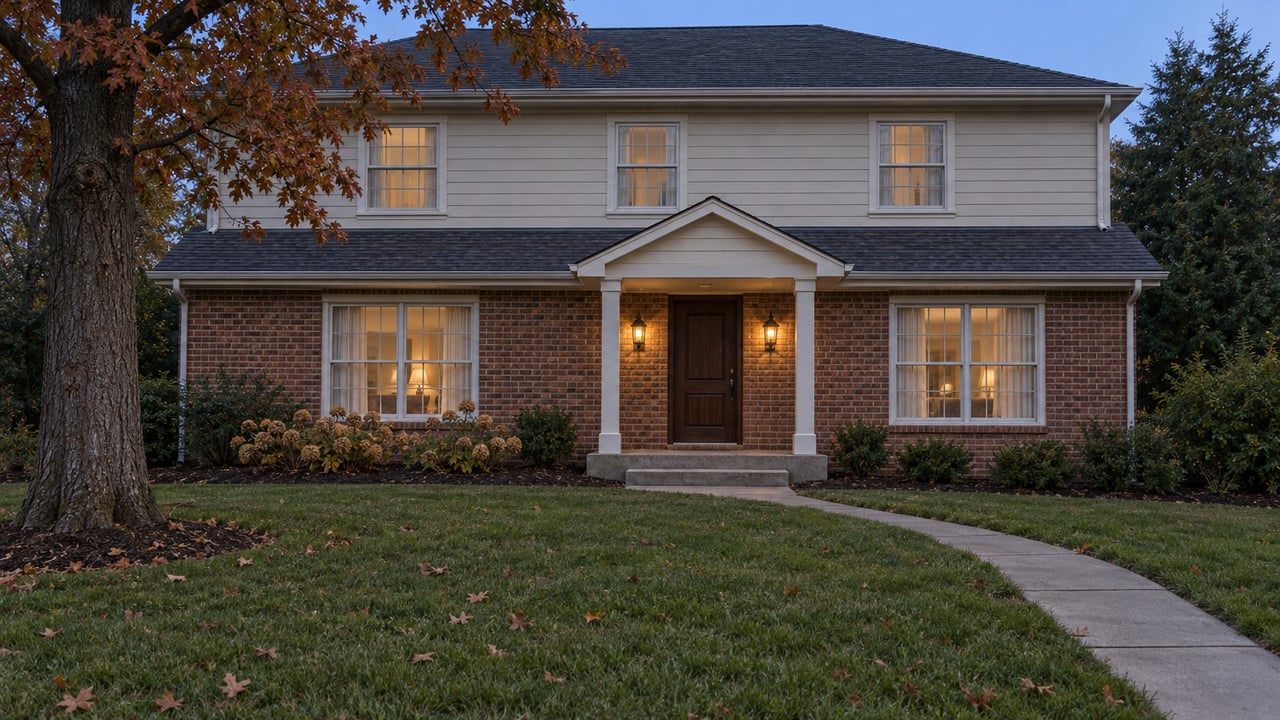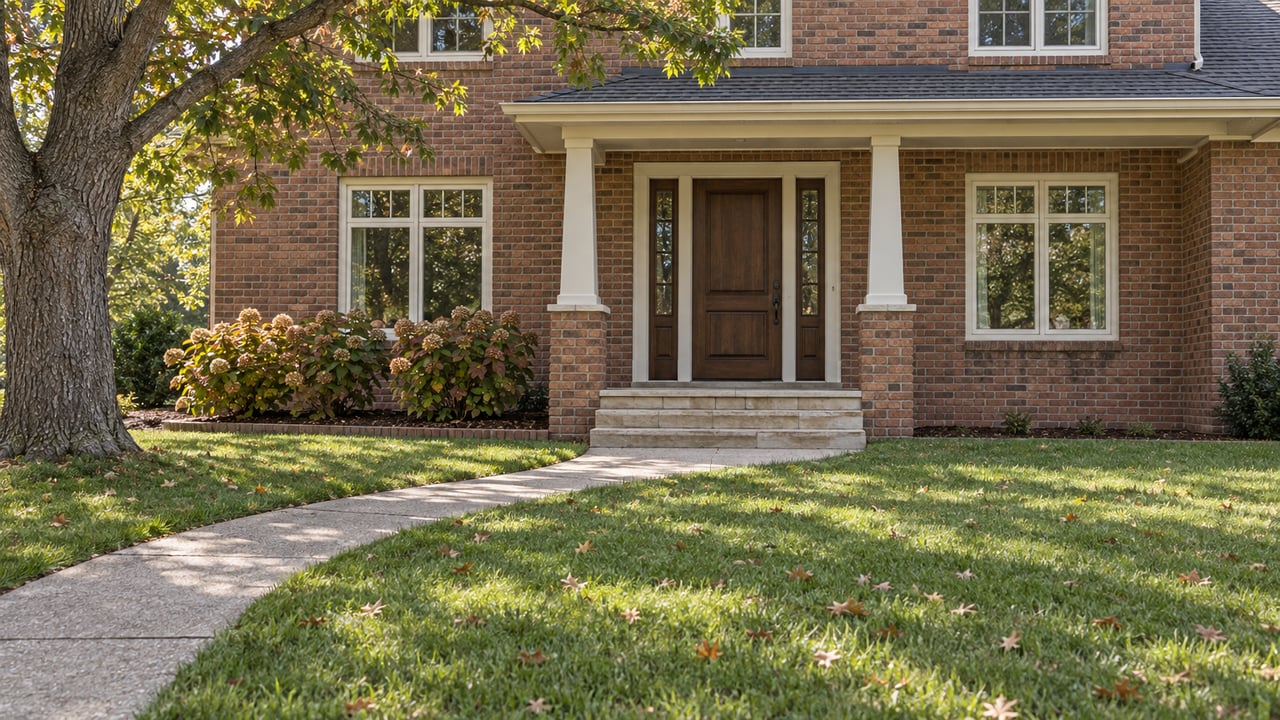
This spring, a buyer shopping in Ladue knew the bidding would be aggressive, so they wrote a cash offer for $1.2 million, fifty thousand dollars over the asking price. It still wasn't close. Four offers came in on that house, and that buyer landed in last place.
"We came in at No. 4."
— reported by St. Louis Magazine
That loss doesn't square with what a lot of buyers are seeing when they pull up Ladue on a real estate app. One portal will show the median sale price falling by more than half in a year. Another will show it rising a few points. A third will quote a list price nearly a million and a half dollars higher than either. If a $1.2 million all-cash offer can still lose a bidding war, why does the "median" for this same market look like it can't decide what it's doing?
The answer isn't that the data is wrong. It's that Ladue sells so few homes in any given month that the median is measuring something closer to which handful of houses happened to close, not what the market as a whole is actually doing. And underneath that noisy number sits a real, stable split that matters a lot more to anyone actually shopping there: Ladue isn't one market right now. It's two, running at different speeds, priced by different logic, and bought by different people.
The Median That Can't Make Up Its Mind
Ladue typically sees somewhere between 19 and 25 home sales in a given month. That's a tiny sample. When one platform reported a median sale price of $1.1 million for October 2025, down 53.9% from the year before, it was working from just 19 closed sales. A handful of smaller homes closing that month, or a couple of larger estates skipping the month entirely, is enough to swing a citywide median by that much. It isn't a signal that Ladue crashed. It's what happens when a headline statistic is built on a sample size closer to a classroom than a city.
At the same time, other trackers were reporting very different numbers for roughly the same stretch: a home value index up 3.2% year over year, and a median list price of $1,647,500 in August 2026. Part of that gap is sample noise. Part of it is that these are three different measurements wearing one label. A median sale price, a median list price, and a valuation index will never agree with each other, because they're not counting the same thing. None of that makes any single number "wrong." It just means the median, on its own, tells a buyer almost nothing useful about what to expect walking into a specific listing.
Two Speeds Under One Zip Code
The number that actually holds steady is days on market, and it splits Ladue cleanly in two. Local market trackers following August 2026 MLS data through the Mid-America Regional Information System put Ladue's move-in-ready homes at a median of 12 to 14 days on market, even with mortgage rates for St. Louis borrowers pushing past 7% by September 2026. Meanwhile, one portal's own citywide average for Ladue in August 2026 was 42 days, roughly triple the turnkey figure.
That gap is the story. A finished, updated home in the Ladue School District is still moving almost as fast as it did during the tightest years of the market. A property that needs work, sitting further down the age or condition curve, is taking three times as long, and it's those slower-moving listings that drag the average up while the fast movers pull the median around in the other direction depending on which happen to close in a given month.
Rate-sensitivity doesn't explain the split either. Regionwide, active listings across the St. Louis metro area climbed more than 15% year over year by late August 2026, and nearly 18% of active listings had taken a price cut. That's a market where higher borrowing costs are clearly biting. Ladue's turnkey segment barely felt it, and St. Louis Magazine's spring reporting described homes at the lower edge of the luxury tier, generally starting around $700,000, drawing heavy offer volume. Buyers competing for finished Ladue homes tend to be paying cash or working with dual high incomes, which is a big part of why a 7% rate hasn't slowed them down the way it has slowed the rest of the region.
The Other Half of the Split
The slower half of the market is mostly older, smaller homes on Ladue's large, mature lots, the kind local builders describe as prime teardown candidates. Builders active in the area put the average price for those homes around $550,000, a steep discount to the finished-home median, because the buyer isn't really pricing the house. They're pricing the land underneath it.
A custom rebuild on that lot typically starts around $2.5 million and regularly runs past $10 million, with well-detailed homes landing somewhere between $600 and $1,200 or more per square foot depending on finish level. Lot cost alone can run $1 million to $3 million before construction even begins. Most custom projects in Ladue today start with a teardown rather than a raw parcel, which adds its own timeline: demolition, an Architectural Review Board process that evaluates how a new home's style and scale fit its surroundings, tree preservation requirements for the oaks, sycamores, and hickories that predate most of the houses around them, and a typical 20 to 30 months from design kickoff to move-in on a $3 million to $10 million build.
That's a fundamentally different purchase than bidding on a finished home against three other buyers in a two-week window. It's also why these listings sit longer. The buyer pool for a teardown is smaller and more specialized, the decision takes longer to make, and the timeline to actually live in the finished product stretches out well past a year. When two or three of those close in the same month as one or two finished mega-estates, the citywide median can swing by hundreds of thousands of dollars without anything in the underlying market actually changing.
The longer arc backs this up. Brokers quoted in St. Louis Magazine this year pointed to how far Ladue pricing has moved since before the pandemic: "you used to be able to buy a nice house for a million dollars in Ladue." Since then, that same broker noted, comparable homes have roughly doubled in price. A split market with two very different products under one zip code is consistent with that kind of long-run appreciation, especially once land value and construction cost are pulling in the same upward direction.
What This Means If You're Shopping Ladue Right Now
Before you compare a Ladue listing to the median you saw online, it helps to know which side of the split it's actually on.
- A listing marketed as "move-in ready," recently updated, or already staged is almost certainly in the fast lane. Expect a short window, competing offers, and likely cash buyers.
- A listing described as sold "as is," priced well under $700,000, or sitting on a large lot with an older or unrenovated structure is probably a land play. Expect a smaller buyer pool, a longer runway, and a comp set built around lot value and rebuild cost, not the flashy finished-home numbers on the portal.
- Days already on market matter more than the citywide median. A home sitting past three or four weeks in Ladue is behaving like the slower half of the market, whatever the headline number says.
- If you're underwriting a teardown, budget the Architectural Review Board process and tree preservation requirements into your timeline before you close, not after.
None of this makes the median on any given portal false. It just means the number by itself can't tell a buyer or seller what to actually expect from a specific address. The mechanism underneath it, the split between a fast-moving finished-home market and a slower land-value market, is what actually determines whether you're bidding against three other cash offers or planning a two-year build.
If you're trying to figure out which side of that split a specific Ladue property sits on, or you're weighing a teardown against a move-in-ready search, Toni Lucas can walk through the comps that actually apply to your situation, not the headline median.
This article is general information, not legal, tax or financial advice. Consult a qualified professional about your situation.